

SAAPE’S ENGAGEMENT IN THE GLOBAL CIVIL SOCIETY MOBILISATION DURING THE IMF–WORLD BANK ANNUAL MEETINGS
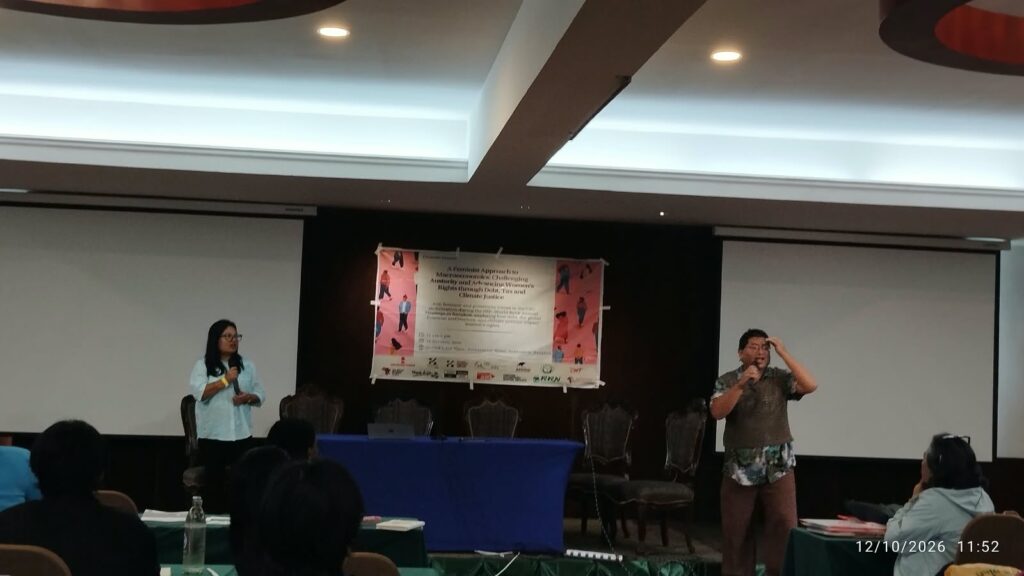
As a lead organiser, SAAPE, together with Climate Watch Thailand, organised a thematic session on “A Feminist Approach to Macroeconomics: Challenging Austerity and Advancing Women’s Rights through Debt, Tax and Climate Justice” on 12 October. The session was organised as part of the International People’s Assembly and the wider civil society mobilisation around the IMF–World Bank Annual Meetings. It brought together feminist leaders, grassroots organisers, women workers, farmers, fisherfolk leaders and civil society representatives to examine how macroeconomic policies and the global financial system affect women’s rights, livelihoods and communities. The session was supported by a broad coalition of organisations, including ActionAid International, LDC Watch, SAAPE, Climate Watch Thailand, NGO Forum on ADB, Rural Reconstruction Nepal (RRN), Christian Aid, Tax and Fiscal Justice Alliance (TAFJA) Asia, Women’s Environment and Development Organization (WEDO), Center for Economic and Social Rights (CESR), FEMNET, Global Alliance for Tax Justice (GATJ), Trend Asia and Tax Justice Network Africa.
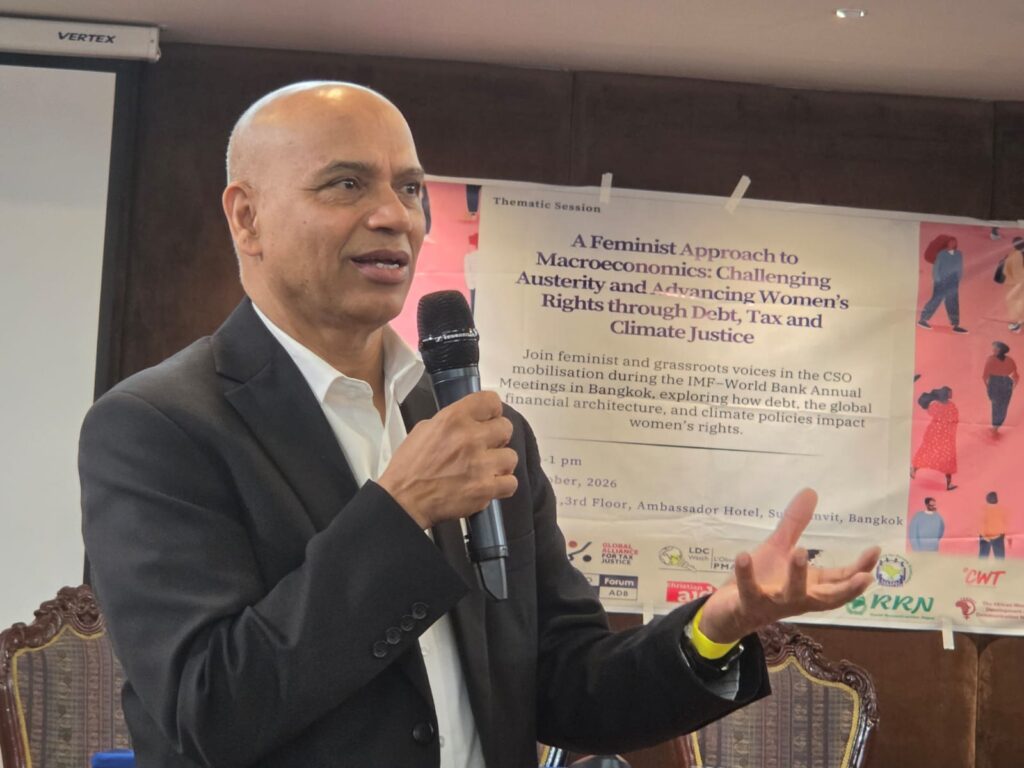
The discussion highlighted the interconnected impacts of debt, austerity, regressive taxation and climate injustice. Participants stressed that these are not separate crises but are rooted in economic and political systems that concentrate wealth and power while transferring social, economic and environmental costs to women, marginalised communities and the planet. Austerity and declining public investment were identified as particularly harmful to women because cuts to healthcare, education, social protection and essential public services increase the burden of unpaid care work carried primarily by women and girls.
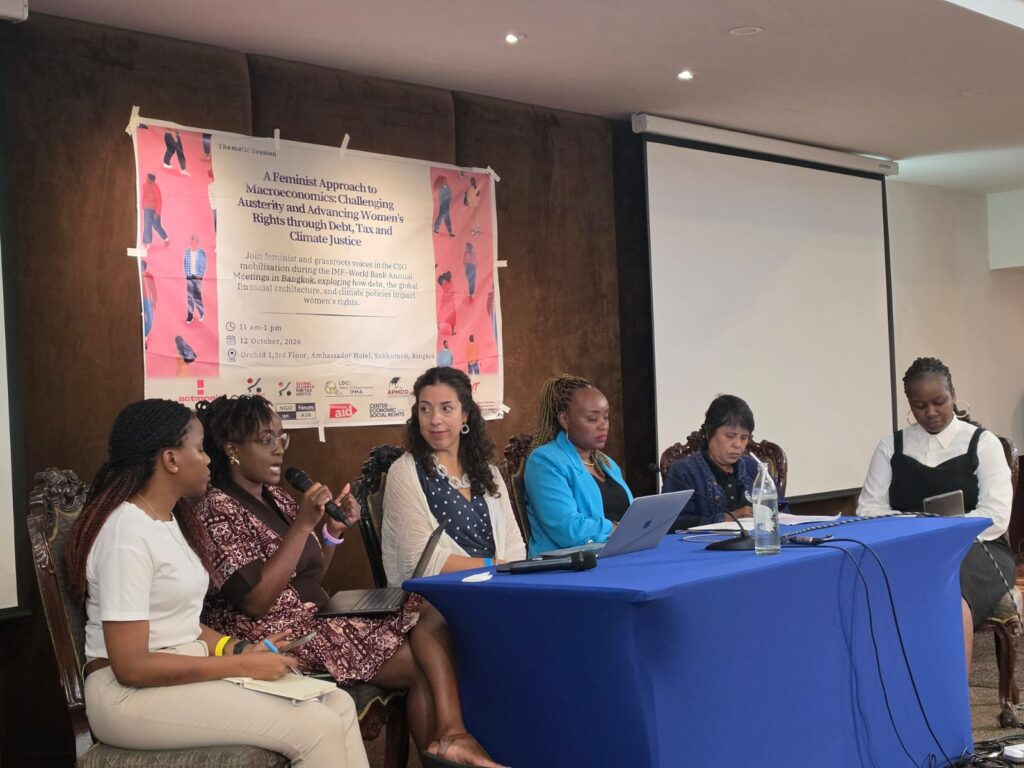
The session developed six key demands for a feminist and people-centred economic transformation:
1. Participants called for greater democratic participation in global economic decision-making and stronger people-led alternatives to the dominance of institutions such as the IMF, World Bank, OECD and G20.
2. Governments should move away from austerity and increase public investment in universal healthcare, education, social protection and care infrastructure, financed through progressive and equitable revenues.
3. Participants called for democratic and gender-inclusive international tax rules and an ambitious and universal UN Framework Convention on International Tax Cooperation.
4. The session called for the cancellation of illegitimate sovereign debt in the Global South, prioritisation of direct grants over debt-inducing loans, and redirection of public resources away from militarisation towards social and economic needs.
5. Participants rejected false climate solutions, carbon markets and maladaptation approaches that can displace or further marginalise women and Indigenous communities, calling instead for community-led alternatives that protect livelihoods, food systems and ecosystems.
6. The discussion highlighted the importance of supporting community-led economic models, women’s cooperatives, cooperative funds and collective solidarity initiatives.
The session concluded with a strong shared message: women’s rights cannot be achieved without transforming the economic system, and economic justice cannot be achieved without feminist leadership and collective action. The messages and demands emerging from the session contributed to the wider discussions and collective demands of the International People’s Assembly.