

SAAPE’S ENGAGEMENT IN THE GLOBAL CIVIL SOCIETY MOBILISATION DURING THE IMF–WORLD BANK ANNUAL MEETINGS
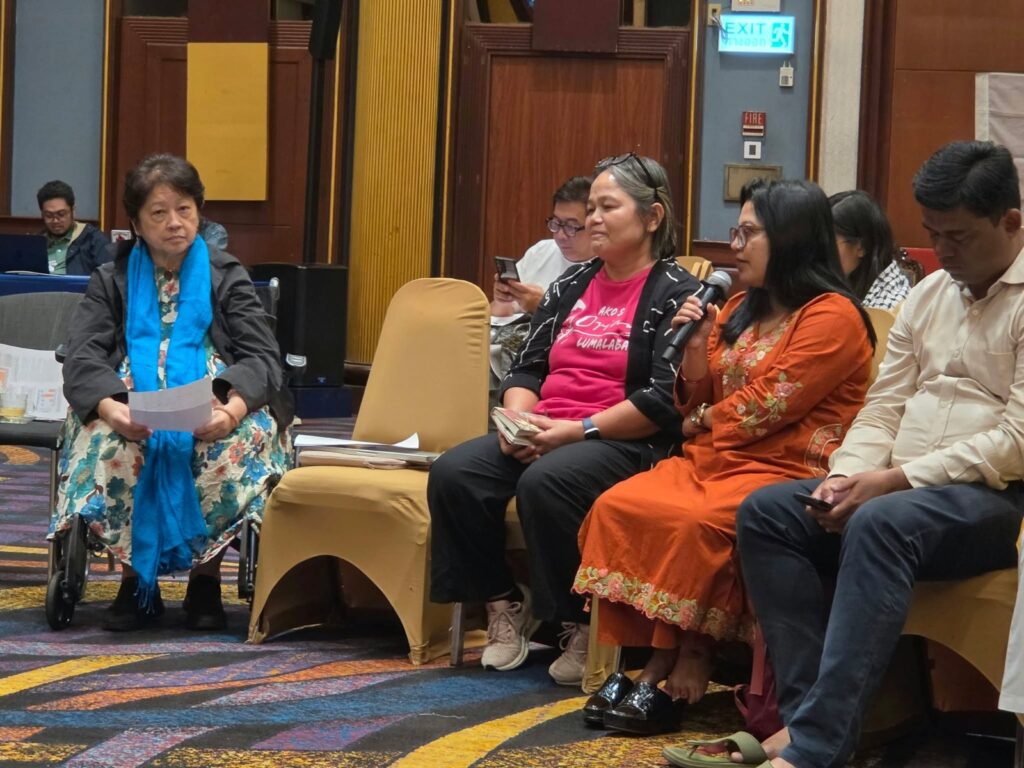
The APMDD organised the self-organised session “The Debt–Tax Nexus: Fiscal Justice for People and Planet” on 13 October 2026 in Bangkok as part of the civil society programme around the IMF–World Bank Annual Meetings. The session examined the close relationship between public debt, taxation and government fiscal space, and how debt-service obligations and tax policies affect inequality, public services, women, workers and vulnerable communities. Reshma Shakya of the SAAPE contributed as a framing speaker on the “Debt–Tax–Climate Justice Nexus,” alongside Lidy Nacpil of APMDD and Boonthan T. Verawongse of ACFOD. Her intervention connected the fiscal pressures faced by countries in the Global South with the growing impacts of climate change, highlighting how debt burdens and unequal tax systems can limit the resources available for public services, social protection and climate action.
The discussion highlighted how regressive consumption taxes, tax incentives, illicit financial flows and high debt-service obligations can further constrain public resources and deepen inequalities. Participants discussed the need for progressive and equitable tax systems, fairer debt solutions and stronger international tax cooperation to expand fiscal space and ensure that public resources are directed towards people’s needs and climate action. The session also explored the importance of linking debt justice, tax justice, climate justice and gender justice. Participants emphasised that climate-vulnerable countries should not be pushed further into debt to address climate-induced loss and damage, and that climate finance should be adequate, predictable, accessible, additional and non-debt-creating. The discussion further highlighted the importance of building stronger connections among civil society organisations, social movements, feminist groups, workers’ organisations and other affected communities. Such collective action is essential to challenge economic policies that concentrate wealth and shift the costs of economic and climate crises onto people and communities.
Who Pays for the Climate Crisis? Climate Finance Imperatives
APMDD also convened the self-organised session “Who Pays for the Climate Crisis: Climate Finance Imperatives and the Complicit Role of IMF–World Bank” on 13 October, 2026 The session examined developments in climate finance, the role of the IMF and World Bank, and the urgent need for financing to address climate-induced loss and damage. Representing SAAPE, Reshma Shakya presented the Nepal case, “Reparations for Loss and Damage, Not Loans!” The presentation highlighted the devastating impacts of the 26 August 2026 Bhote Koshi–Trishuli floods and the financial challenges facing affected communities and the Government of Nepal. The presentation framed the central financing question as whether recovery support will be provided through grants and reparations or through new debt and policy conditions.
SAAPE highlighted five key demands:
- Reject debt-creating recovery as a substitute for climate reparations.
- Scale up new, additional and predictable public finance for loss and damage.
- Capitalise the Fund for Responding to Loss and Damage at a scale that reflects actual needs and ensure direct and accessible support.
- Make financing instruments, conditions, repayment terms and policy commitments transparent.
- Ensure affected communities, women, workers, Indigenous peoples and local governments participate meaningfully in recovery decisions.
The presentation also highlighted Nepal’s formal request to the Fund for Responding to Loss and Damage (FRLD) and stressed that climate finance should not reproduce the debt burdens and power imbalances associated with conventional lending. For SAAPE, the Nepal experience demonstrated that climate finance, debt justice and climate justice cannot be separated. Communities that have contributed least to the climate crisis should not be required to borrow their way out of climate-related devastation.